A Korean Developer Built a "Map for Beggars." 1.3 Million Koreans Used It in a Month.
Seoul Signal #078 — Beggar Map hits 1.3M users, campus zones hollow out.

1. Korea’s “Beggar Map” Hit 1.3 Million Users in 30 Days. It’s Not a Joke — It’s Infrastructure.
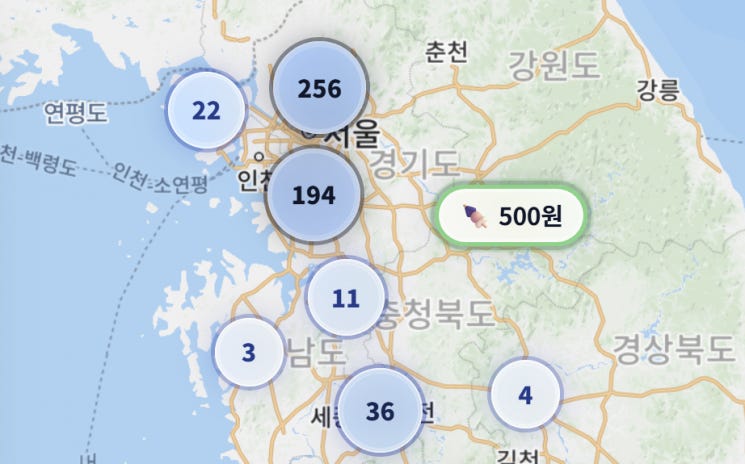
In March 2026, a Korean developer named Choi Sung-soo launched a website called Geojimap (거지맵) — literally, “Map for Beggars.” The concept: a crowd-sourced map of every restaurant in Korea where you can eat a full meal for under 10,000 won (roughly $7).
Within 18 days, the platform had 940,000 cumulative visitors. By April 23, it crossed 1.3 million. Peak daily traffic exceeded 250,000 users. More than 5,000 restaurants and cafes have been listed — all verified by the community (News1, April 3, 2026; ZDNet Korea, April 2026).
The name is deliberately provocative. “Beggar” (거지) isn’t a euphemism — it’s the actual term Korean internet culture uses for extreme frugality communities. The platform grew out of “Geoji-bang” (거지방), or “beggar rooms” — Kakao open chat groups where members share their daily spending and get judged by the group. Spend too much on lunch? The room roasts you. The culture started as dark humor. It became a genuine savings mechanism. Geojimap turned that energy into a searchable product.
The platform’s quality standards are surprisingly rigorous. Meals priced above 7,000 won that consist mainly of carbohydrates with no protein can be flagged and delisted. The community evaluates listings using what the site calls “the collective intelligence and strict evaluation of beggars.” This is not a simple restaurant aggregator. It is a crowd-sourced cost-of-living survival tool with editorial standards.
The timing is not accidental. Korea’s April 2026 consumer price index rose 2.6% year-over-year — the highest in 21 months — driven by a 21.9% surge in petroleum prices following the Middle East conflict that escalated in late February (Statistics Korea, May 2026). The average price of gimbap — Korea’s most basic grab-and-go meal, the closest equivalent might be a basic bodega sandwich in the US — hit 3,800 won in Seoul in February 2026, up 7.4% from a year earlier (Korea Times, April 2026). A bowl of jjajangmyeon (black bean noodles), long considered Korea’s cheapest restaurant meal, now averages over 7,000 won in Seoul. Eating out on a budget in Korea requires research that didn’t exist two years ago.
The user base tells the structural story. Geojimap started with job seekers and entry-level workers — people with tight monthly budgets. It has since expanded to include office workers trying to cut lunch costs and, increasingly, middle-aged users who never expected to need a tool like this. Marie Claire Korea ran a feature in April 2026 calling it the “crystallization of jjantekeu” (짠테크) — a portmanteau of “stingy” (짠) and “jaetekeu” (재테크, personal finance management), describing the gamification of extreme saving that has become a defining financial behavior of Korean millennials and Gen Z (Marie Claire Korea, April 2026).
Why this matters to you:
Geojimap is a consumer signal, not just an app. When 1.3 million people in a country of 51 million voluntarily adopt a platform called “Map for Beggars,” the naming itself is the data point. Korean consumers — particularly those under 40 — have moved past the shame stage of budget living. They are proud of it. They are competitive about it. They are building community tools around it.
For food and restaurant brands watching Korea: the under-10,000-won price point is no longer a low-end niche. It is the center of gravity for an entire generation’s dining behavior. Geojimap’s growth suggests that price transparency — knowing exactly what a meal costs before you walk in — is becoming a baseline expectation, not a discount-hunting behavior. The playbook for entering Korea’s food market at this price tier just got a public, crowd-sourced quality benchmark.
2. Korea’s University Districts Are Hollowing Out. Sinchon’s Vacancy Rate Is 3x the Seoul Average. Hongdae Survived — By Becoming a Tourist Zone.
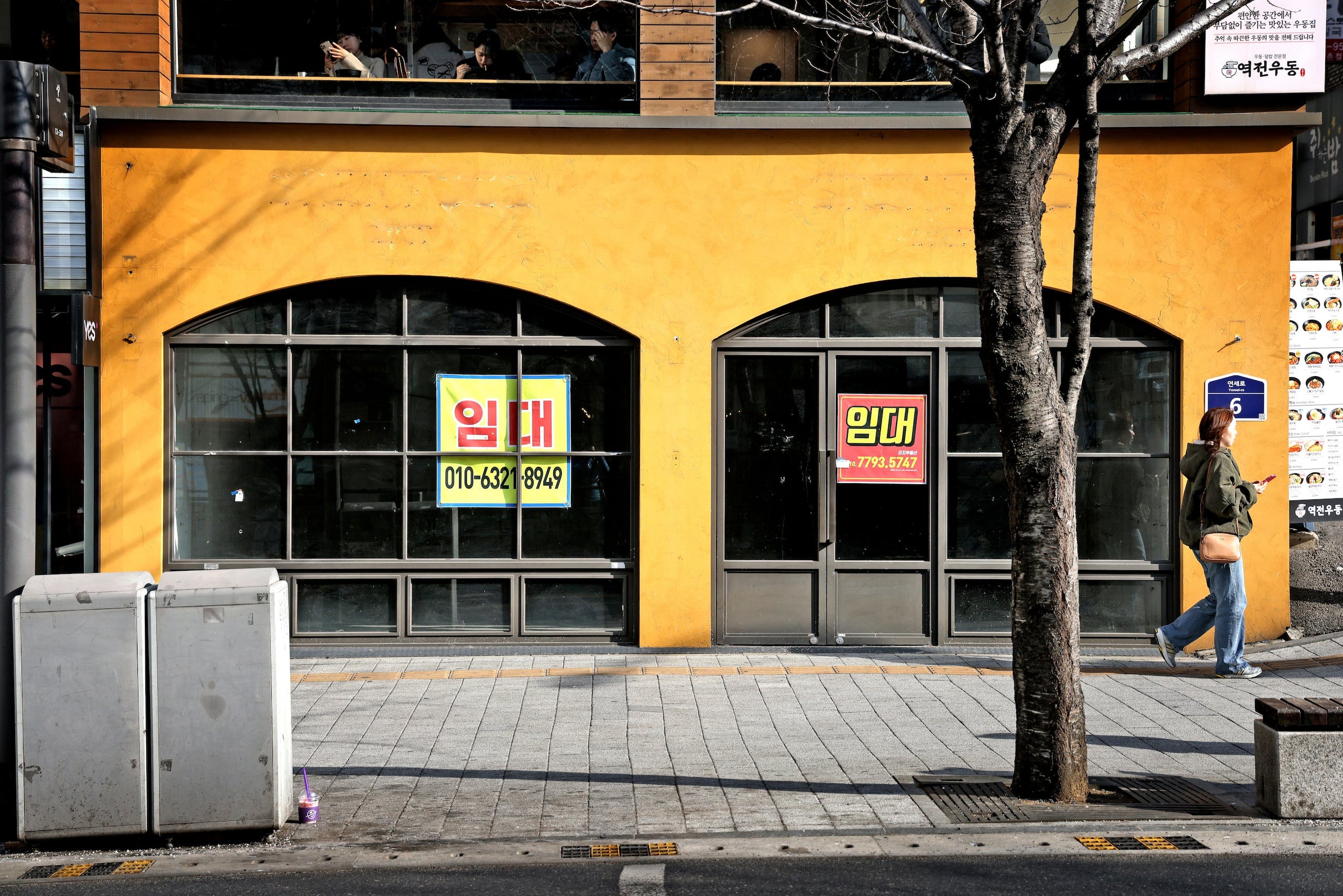
Seoul’s iconic university commercial districts — the neighborhoods that defined Korean youth culture for decades — are diverging sharply. One is dying. The other survived by replacing its original audience entirely.
Sinchon (신촌), the commercial strip between Yonsei University and Ewha Womans University, now has a small-retail vacancy rate of 15.1% — roughly three times the Seoul average (The Public, May 2026). Nearby Konkuk University’s commercial area hit 18.2%. These are not marginal neighborhoods. They were, within living memory, the centers of Korean college culture — where trends started, where new restaurants launched, where young Koreans spent their disposable income.
The revenue data confirms the structural decline. Sinchon station’s commercial district posted 382.6 billion won in sales in 2025 — down from 417 billion won in 2023, marking two consecutive years of decline. The 20-somethings’ share of Sinchon spending fell from 33.3% in 2021 to 27.2% in 2025 (Aju Economy, May 19, 2026). The students didn’t just spend less. They left.
The forces are converging: Korea’s college-age population (18-year-olds) dropped from approximately 570,000 in 2016 to 440,000 by 2024 — a 23% decline in eight years (e-National Index, 2024 data). Delivery apps and online shopping eliminated the need to physically visit commercial strips. Unmanned stores and kiosk-based businesses — which Seoul Signal covered in #043 — replaced the labor-intensive cafes and restaurants that once anchored these neighborhoods. The university district as a physical consumption ecosystem is shrinking at every input: fewer students, less foot traffic, lower per-visit spending.
Hongdae (홍대, the arts-and-nightlife district near Hongik University in Seoul’s Mapo district) tells the opposite story — but the punchline is complicated. Hongdae station’s commercial district posted 618.7 billion won in 2025 sales — up 30.1% from 475.5 billion won in 2021, but notably down from a 2024 peak of 635.9 billion won (Aju Economy, May 19, 2026). And even in Hongdae, the 20-somethings’ share of spending dropped from 47.9% in 2021 to 43.4% in 2025. What filled the gap — foreign tourists. Hongdae now ranks as the third-highest district in Seoul for foreign tourist spending (Aju Economy, May 19, 2026). Office buildings near Hongdae station are converting floors into short-stay accommodations for international visitors. Mapo-gu’s commercial real estate is being repriced around tourist foot traffic, not student foot traffic.
Why this matters to you:
Korea’s university districts are a leading indicator for every developed market facing demographic decline. When the college-age population drops 23% in eight years, the commercial infrastructure built around that population doesn’t gradually adjust — it fractures. Some districts die (Sinchon). Others survive by finding a replacement audience (Hongdae’s pivot to tourism). The pattern will repeat in Japan, Taiwan, and eventually parts of Europe.
For retail and F&B brands: the Korean university district is no longer a reliable test market for reaching young consumers. The 20-somethings are still spending — but they’re spending online, on delivery platforms, and in non-geographic communities. The physical storefront in a university neighborhood, once the default launch strategy for reaching Korean youth, is becoming a legacy format.
Micro-Signals
Gacha Shops Are the Next Chapter of Korea’s Unmanned Economy (Kyunghyang Weekly, March 2026)
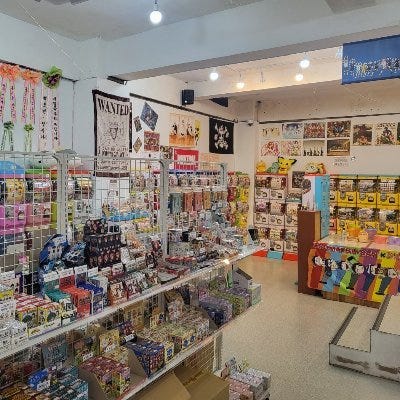
Seoul Signal #043 covered Korea’s unmanned store boom — the kiosk-first business model spreading from ice cream shops to study rooms. The latest mutation: “gacha” (가챠) capsule toy shops occupying ground-floor retail space that used to house clothing stores or phone accessory shops. Walk through any Korean shopping district in May 2026 and you’ll see rows of capsule vending machines — now one of the fastest-growing unmanned micro-retail formats. The appeal is pure dopamine economics: spend 500 to 3,000 won, get a random collectible, post the unboxing. The randomness is the product. For retail landlords, the math works differently: gacha machines require no staff, minimal floor space, and generate steady foot traffic. In a commercial real estate environment where vacancy rates in university districts are hitting 15-18%, a bank of gacha machines is increasingly the most profitable tenant per square meter.
Gimbap Crossed ₩4,000 — And Became a National Conversation (Korea Times, April 2026)
The average price of gimbap (김밥) — Korea’s most universal cheap meal, a seaweed rice roll filled with pickled radish, egg, and vegetables — hit 3,800 won in Seoul in February 2026, with many shops now charging 4,000 to 4,500 won. A year earlier, 3,500 won was standard. The price of gimbap functions as Korea’s unofficial inflation index — more culturally resonant than CPI data. When gimbap costs more, Koreans feel it immediately. The Geojimap phenomenon is, in part, a direct response to gimbap inflation: if the cheapest meal in Korea keeps getting more expensive, you need a map to find what’s left.
“Morning Socializing” Replaces After-Work Drinking (Careet, March 2026)
Seoul Signal #050 covered Korea’s MZ generation walking away from alcohol. The behavioral replacement is now visible: “morning socializing” (아침 소셜링). Instead of meeting friends at bars after 9 PM, young Koreans are meeting at cafes before 9 AM — for journaling clubs, reading groups, or simply sitting together before work. The format fits the broader “sober curious” trend, but the Korean version has a specific economic logic: morning cafe visits cost 4,000-5,000 won per person. A night out at a bar costs 30,000-50,000 won. The shift isn’t just about health. It’s about the math.
Today’s Signal
One pattern connects everything in this issue:
The geography of Korean consumption is dissolving.
Geojimap maps cheap meals because the old discovery method — walking around your neighborhood — no longer works when prices vary wildly block by block. University districts are hollowing out because the students who defined them now consume through screens, not streets. Hongdae survives only by importing a non-local audience. Morning socializing replaces evening drinking partly because the venues are cheaper, but also because the social infrastructure has moved from bars (fixed locations, high minimums) to cafes (ubiquitous, low cost, no commitment).
Korean consumers aren’t leaving the physical world. But they’re renegotiating every assumption about where, when, and how spending happens in physical space. The fixed commercial district — anchored by foot traffic from a predictable local population — is giving way to something more fluid: spending that follows price signals, community maps, and timing optimization rather than geographic habit.
This is what inflation does to a digitally native generation. It doesn’t just change what they buy. It changes where they go.
— JoonMo, from Seoul 🇰🇷
Seoul Signal covers Korean trends across beauty, fashion, food, lifestyle, wellness, entertainment, and design. New issues drop every week.